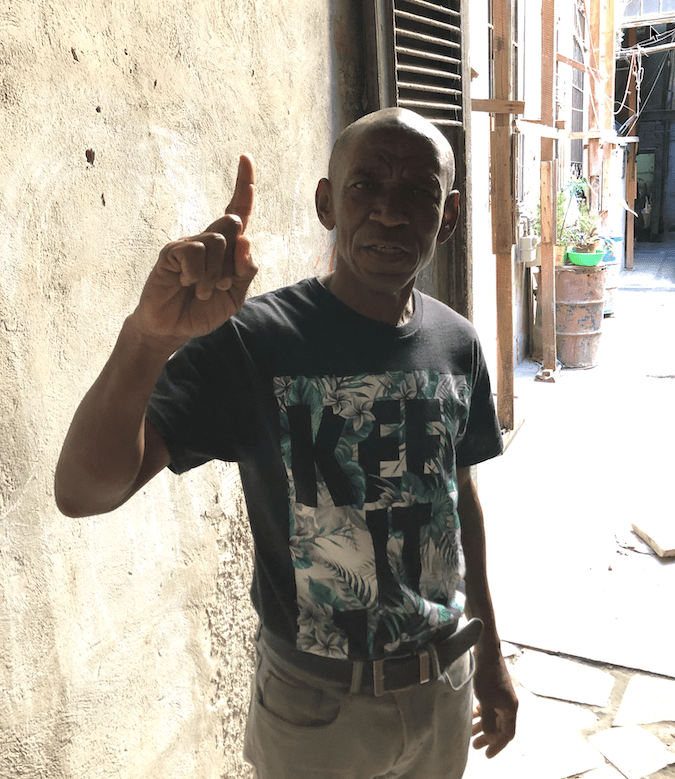
Ruel

Ruel – The Family Man


Background

The most important thing in Ruel’s life is simply, but emphatically: Family. He is a quiet man who knows his limitations but finds simplistic joy in his everyday surroundings. He is a man of few words but thinks profoundly about what he says before he speaks. This gift of wisdom gives him the stability to react in situations with a calm head and a focused mind.

Ruel’s reserved nature allows him to observe the world around him, gaining a unique and thoughtful perspective on life in Cuba for the common citizen. He describes himself as a valiant and fearless man, who at all times stands his ground for what he feels is right for himself and for his family. This is his story:


The Past

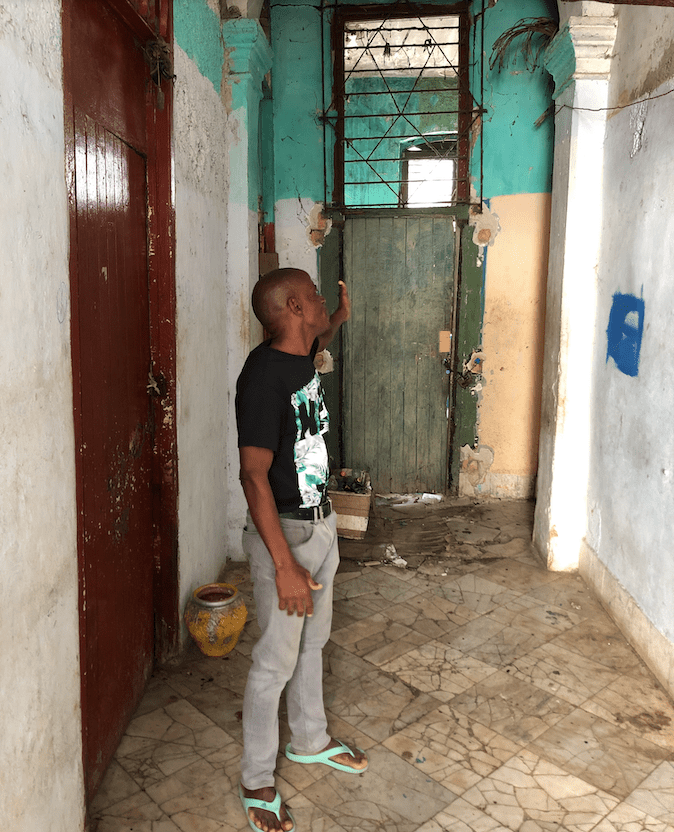
Ruel’s family includes his two sisters, his mother and his three nieces. As the only man in the family, Ruel feels an added responsibility to provide in any way possible for his family. The four adults and three children live together in a small, rundown apartment in the heart of Havana. They are a close-knit family who look out for each other, providing a place of security and refuge despite any unrest or uncertainty in the world around him.

When Ruel reflects on what has influenced his life most, he lands on a single word: Society. With further prodding for an explanation, he discusses the constant changing of society, societal norms, government practices, economic policies and opportunities as constructing his experiences. These changes in the society around him in Cuba, have had the greatest impact in his daily life.

As a child, Ruel had dreams of escaping his poverty through grand ambitious to be a traveling businessman. He desired to help lift his family away from the daily requirements of food, a place to sleep and clean water to drink, to a state of influence and power, to impact the world beyond his small family. No matter the area, no matter the product, Ruel simply wanted a means to escape the daily fight for necessities and live a life where he could think about more than basic survival.


The Future

Joy for Ruel is all about his family. “Living well as a good citizen of the world with my family, that brings me joy,” he says. He finds hope in the future by having hope in his family. Yet Ruel acknowledges there is misery in the direction that Cuba is moving now. Instead of more security and more opportunity, he fears the future for Cubans will be more of the same or even fewer opportunities to live the dream of escaping poverty through industry and work.

Ruel admits the challenges he faces, working as a server in a small restaurant with only the capacity to seat three tables. Yet he knows this is not his future. He trusts in himself, that he will continue to work and to strive and to struggle, but will create a better future for not only himself, but his sisters, their daughters and his mother. As he trusts himself, he is very cautious of trusting any others. In fact, he describes trust as only in himself, and that he feels distrust towards the rest of the world. He feels he can only really rely on himself to get him through the challenges life throws at him. Despite having some hopes of a better future, he feels he must live day by day, because he never truly knows what his next day will hold.


His Perspective

A unique perspective Ruel holds is that the most commonly misunderstood part of his culture is simply that the world looks at Cuba in a black and white scenario. They don’t see the good that happens, he feels the country has been labeled as completely dire.

Yet that’s not entirely true. Just as in all parts of the world, they experience the good and the bad together. There are things to be celebrated in Cuba and times of joy, as well as times of pain and devastation. Ruel feels that because the world sees Cuba in only a negative light, they don’t understand the joy that can be felt in his homeland. “Cubans don’t only experience difficulty, they also experience joy and happiness. Yet most foreigners never see this side of Cuban life.”

Although he readily admits his greatest flaw is that he has had no opportunity to know any other life, culture or country than his own, Ruel feels that the love he has for his family is not appreciated by the outside world for the joy it brings him.

Follow My Blog

Get new content delivered directly to your inbox.
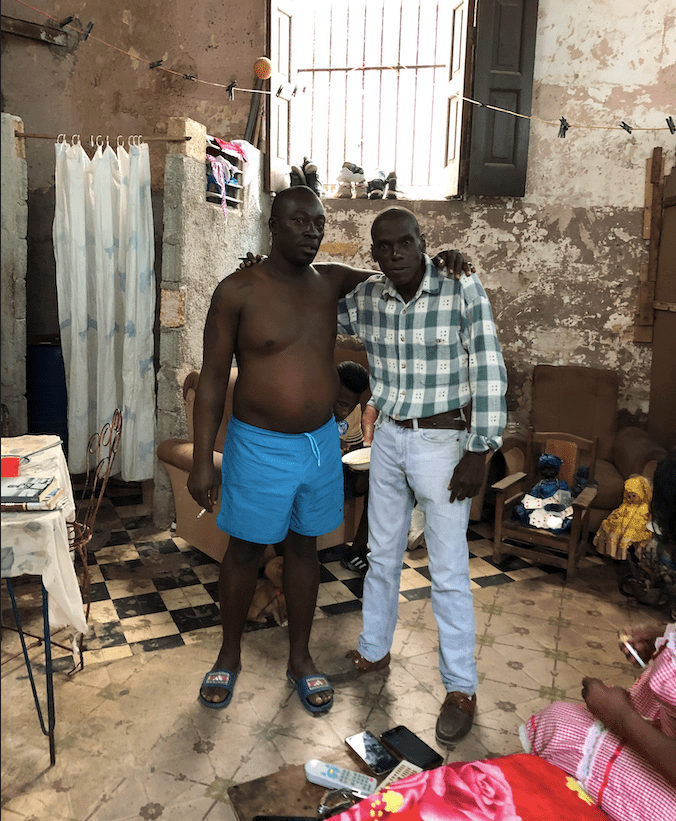
John

John – The Ghanaian Professor


Background

John is an outgoing and highly educated man. Yet he lives a life, he feels, that is very constricting to his opportunities for growth and advancement. Seeing the imbalance of power, wealth and simple division in his now home country of Cuba, causes John daily pain. His concern for the world around him drives him to have his voice heard. Yet his caution for being silent keeps him in a perpetual state of uncertainty, seeing injustice, but unable to speak out for fear of further injustice has left John bitter about most things in his present. John hangs on to the hope of better days to come.

The desperate situation leads John to strive for better things, simple happiness in his home of friends and family, celebrating when and what they can as well as sharing what little they do have. His story of injustice and compassion gives him the unique perspective of love for those closest to him and anger at those keeping him bound.

The Past

Born originally in Ghana, John moved to Havana for the opportunity to become a professor at a University. Many years ago, he came to Cuba with the hope of educating a population he felt was in desperate need to learn the truths of history. With such a noble goal in front of him, John quickly became discouraged when he saw the limitations of his materials, the oversight of his teaching methods and the lack of freedom to simple teach historical truths.

Despite knowing from his youth that he’d likely never lead a life of luxury, he felt strongly he could make a difference in the world through his love and study of history. John works at a local university in Havana where he finds each day as he prepares to teach his students, redacted information, history books with missing pages and strong guidance to not cover certain ideas. He longs for a future where the freedom of information and the truth will surface for the people in Cuba.

With his meager salary of $25 a month, he feels stuck in his situation. He’s cautious to not cause any additional trouble for himself, but also feels that the oversight at his position as a university professor restricts the freedom of learning, to teach his students, to inform them and let them make their own judgements on historical events. He understands the power of ideas and how information can control and propel people to act, yet he believes transparency will produce a better educated population that can build up the nation, instead of leaving it bound in its current state without progression.

The Future

John lives with several others in a run down, ground floor one room building. There are several that come and go, sometimes spending their nights there, if there is room to accommodate them. His salary and poverty keep him tied to this location, unable to even travel back home to his native country of Ghana. Yet despite his difficulties he has learned to manage his situation and find happiness.

He is fiercely loyal to those friends who have become his family here in Cuba. They enjoy the little things in life and celebrate what they can, including birthdays and holidays, anything to feel like they have more control over their lives, that they have something to look forward to and enjoy. Although he describes his home as a “cell”, John seeks to find happiness and meaning in his life through his career, his Cuban family and his desire for the division to improve.

His Perspective

John’s greatest struggle is seeing separation. He walked me down one block away to fancy hotels, expensive restaurants, well-kept homes with space and furniture. “Why is there so much separation, why is there such a division?” He describes how many of those in poverty work long hours in desperation and put forth immense effort to simply survive each day, yet “where is the money?” He sees the tourism, the commerce, the trade and wonders why none of the money goes to the Cuban people.

He sees himself as a proud man, not taking any handouts, and not letting it be known that I even paid him for his time. “I’m not a beggar,” he said, explaining his secrecy. His perspective is appearances make all the difference and when we appear as beggars, we think as beggars, we act as beggars. But when we make the change to appear as contributors and can think and act that way, we may start seeing the changes necessary in this world for a decrease in division and an increase in unity.

Follow My Blog

Get new content delivered directly to your inbox.

Mohammed

Mohammed – The Revolutionist


Background

Mohammed is an outgoing and passionate man who fights for his belief that the Cuban government must change to improve the lives of its citizens. Without the freedom of information, freedom from poverty, and freedom of opportunity, the people will always be bound in a state of overwhelming imbalance of power. The focus of change drives Mohammed’s entire life, past, present and future. He is a man of the people, a man from the streets, living in his state of poverty, but with a voice he hopes one day will enact the change and the revolution he feels the people of Cuban desperately need.

The best moment in his life, Mohammed believes, is yet to come: to see his country be free.

The Past

Mohammed is a Muslim living in Havana. He has done everything to educate himself in a world without opportunity. He spends his time studying books and learning various languages. He is fluent in Farsi, Arabic, Hebrew, Spanish and English. As a part of his past, his focus on education led him to feel very constrained and trapped. He learned of other people, other cultures with free access to the internet, with freedom from oppressive authority figures, and freedom from an extreme separation of wealth so they could improve their economic standings with a view of admiration.

His past studies led him to a path of full fidelity to what he sees as the only way to happiness: freedom. Mohammed began to see difficulties in his own nation and people that before he felt blind and unable to see. He described recognizing that many Cuban people “are like the chicken. They constantly turn their head from one way to the other, constantly changing their belief depending on who is around them.” He described the “chicken” weakness not only because of fear of those in power, but also an unwillingness to stay true to personal beliefs of freedom. He has rejected this practice of passiveness and divulging in the few available technologies that, he feels, curb the appetite of the youth away from real change and real freedom.

The Future

All ideas, both present and future, are concentrated on making lasting change to improve his quality of life for himself, his family, his friends and his people. Mohammed strongly believes that change is possible and he will always be fighting for that change to improve the quality of life for all Cubans in poverty. His hope and focus on improvement, he believes, will eventually cure the “chicken” issue of Cubans being too fearful to enact progress. As others see him openly sharing ideas of revolution, not through bloody means, but through the power of information and freedom of speech, sharing ideas, knowledge, and economic possibilities, he hopes the spark of freedom will spread.

He is still unique in his views, many others in his neighborhood shy away from his bold ideas of revolution. He strives for more access to information, as he believes the internet and truth of information will give him and his people the power to break free from their impoverished and fear bound state. “The only way the Cuban people will break free is if the will to change comes within. It is not outside our country that our problems stem from, it is from within. Our human rights fight is right here.”

His Perspective

“You need only look to the pharmacy lines to see the dire situation my people face every day.” Early morning lines develop quickly at nearly every pharmacy which hold very limited medicines that run out completely after only a small fraction of those in the long lines, spanning around the block, receive needed medication. He feels his eyes are open and being honest with himself in all situations, he regards it as his moral duty to fight for the change needed for the people in Havana and throughout the entire country.

Mohammed’s perspective shows the difficulty of his situation, the Goliath he faces with odds becoming increasingly against him. Yet his hope and confidence of a better world, propels him to continue to spread the word of revolution to those who will listen, lighting a small spark that may one day change a nation. He hopes the billboard seen near Revolutionary Square in Havana could one day become a reality, where his people can “understand love, but not hate.” He has extreme love to his people and hopes for the peaceful revolution to real freedom.

Follow My Blog

Get new content delivered directly to your inbox.

Armando

Armando – the Fisherman


Background

Armando is a simple man, who works for everything he gains, in every aspect of life. Finding ways to survive and improve life for himself and his small family consume his total focus. Sitting by the harbor in Havana, he uses fishing line, with no reel, in his hands to fish for sardines for his family. Times are difficult in Cuba and in order to have enough food for him, his wife and his 3-year-old daughter, he spends the evenings fishing with line directly in his hand and only one hook.

The Past

Armando has always sought a better life for himself. He is observant, but humble, hopeful yet bold in his risks. Once during his life, he made the dangerous 90-mile voyage from Havana to Miami in a boat with a small motor, no longer than 10 feet.

He describes the seas as very rough and the journey as perilous. Although hundreds of Cubans throughout history have made this trip, it is one of high risk. He’s known others who drowned taking the very same route. During his own experience, with the highly trafficked Caribbean seas, massive cruise liners pass by the small motorboats frequently. The massive waves the cruise ships leave in their wakes caused Armando’s own boat to capsize while out at sea. He and all his companions made it safely back to the boat and, after great effort, while treading water, flipped the boat right side up to continue the journey to Miami.

While in Miami, Armando found work in any fields he could: manufacturing, construction, server, anything to save money and send back to his wife, and at the time, newborn daughter. The distance apart, the longing to be together and the priority of family, all took a back seat to the priority of surviving and just providing for daily meals. Yet after less than a year, Armando was deported back to Cuban where he lives now today.

The Future

In discussing his future, Armando answered in the same ways as many Cubans. He said, “That question is such an American way of thinking, you think about your future because you have opportunities. When you don’t know if you will have enough food to eat each day, the future is not a concept you can even think about.”

He hopes commerce in Cuba will rise with less restrictions from the foreign countries, specifically the United States. With more free tourism, free trade and increased job opportunities for the Cuban people, he believes not only he, but many of his people can rise out of their poverty.

His Perspective

Life is tough for Armando, he is in a constant search for means to meet his basic needs of food, water, and shelter. Yet he also finds ways to maintain a meaningful pastime. Armando collects old coins and has several that are over 50 years old. His simple pleasures help him through the difficulty of trying to feed a family with a full time job making barely more than $40 a month, so he spends much time away from his family to provide for their needs.

He feels that people misjudge him as unintelligent or uninformed, but his life experience has given him a perspective into a life only those who fight each day for their food can understand. He dreams to travel, he dreams to gain more knowledge, he hopes for more freedom and to impact the world, but until he can provide for his family and more, he remains constantly focused on working, fishing and providing food.

Follow My Blog

Get new content delivered directly to your inbox.